
Optimizely hack: crypto address swapped? Check transaction
On 16 November, Optimizely malware swapped crypto addresses on 178 organisations, Ledger included. What happened, and how to check your transaction?
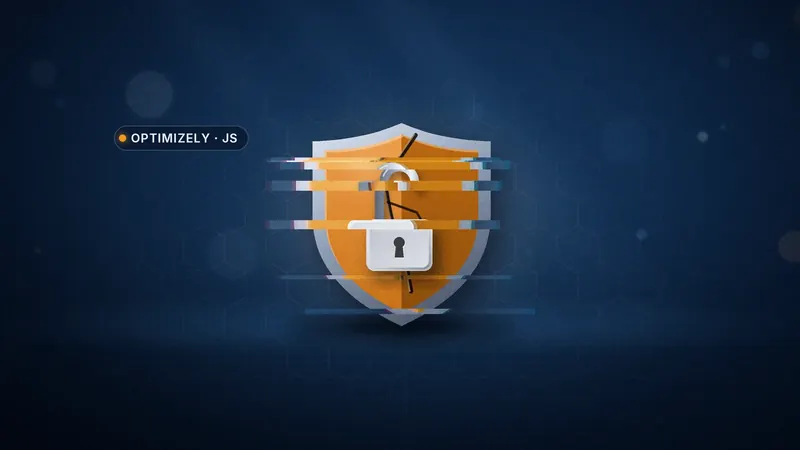
On 16 November 2026, an attacker had malicious JavaScript served through Optimizely, a service companies use to test their websites. According to security firm Report URI, visitors to 178 organisations received that code, including the sites of hardware wallet maker Ledger, the BBC, Zoom, HSBC and ABN AMRO. The code replaced crypto addresses on the page and on the clipboard with the attacker's addresses. If you copied an address from a website on 16 November and paid to it, check your transaction now.
Optimizely hack in short
- When: Report URI saw the first infected code on 16 November at 04:21 UTC, on the BBC. Most of it had been cleaned up by that evening: at 21:52 UTC, 1 of the 188 infected files still contained the code (TalkTalk's).
- What the code did: replaced addresses for Bitcoin, Ethereum and other EVM networks, Tron, Solana, TON, Litecoin, Bitcoin Cash and Dogecoin, captured card details from ordinary form fields, and tried to attack the operating system on older iPhones and iPads.
- How much was stolen: according to Report URI, the attacker's addresses had received about $7,040 at the last measurement on 16 November. Analyst Alex Thorn of Galaxy Digital estimates that victims themselves sent only about $2,300.
- How it was possible: Optimizely says an unauthorised party exploited a vulnerability in the sign-in process of its Experimentation product. How the attacker reached so many customer projects has not been explained.
- What you do: check any transactions from 16 November, update iOS, review your card statements, and from now on verify every address on the screen of your wallet or hardware wallet.
What happened
Many websites load a small script from an external service. Optimizely works this way: the company offers a script at cdn.optimizely.com, in which the customer puts their experiments and, optionally, their own JavaScript. Report URI explains that the attacker wrote their code in the custom JavaScript field (Project JavaScript) of customer projects. The file kept coming from Optimizely, with Optimizely's certificate, from an address that every affected website already trusted. So the websites themselves were not hacked: the infection came in through a service provider's script.
Report URI retrieved 1,611 Optimizely files that it could find and found the code in 188 of them, belonging to 178 organisations. That is a lower bound: only files the company found in time could be checked. According to Report URI, the attacker rebuilt the code 26 times that day, and at 13:43 UTC a component was added that captured card details.
Optimizely wrote on 16 November that it has blocked the vulnerable route, removed the code, ended active sessions, revoked access tokens and informed the affected customers. It also says it now prevents code from being delivered via Cloudflare. The investigation is still ongoing, a spokesperson told Cointelegraph.
Who was on the list
Report URI divides the 178 organisations by sector. In the crypto and trading sector (six organisations) it names, among others, Ledger, IG, OANDA / Coinpass, interactive investor and TMS Brokers. The list of banks also includes European names, such as ABN AMRO (the sites abnamro.nl, abnamro.de and abnamromeespierson.be), ICS Cards and S-Pankki. Well-known names such as KLM, Air France-KLM, IKEA, Zoom, Salesforce, GitLab and the BBC are listed too.
Being on that list only means that the organisation's Optimizely file contained the code. It does not mean every visitor lost something. Whether a visitor was actually affected depended on what they did on the page. For Ledger, Report URI gives 20:41 UTC as the time of clean-up. Cointelegraph had asked Ledger for a comment; it does not appear in the article.
What the code did
The script checked the check digits of an address, so that it only replaced real addresses. According to Report URI and StepSecurity, it could not read card numbers in payment fields from Stripe, Adyen and similar providers (which sit in their own iframe).
How much was stolen, and how certain is that?
The sources give different amounts. That is because they counted at different times and in different ways.
That is a small amount for an attack of this reach. Report URI itself says it cannot see how many card numbers or cookies reached the attacker. Founder Scott Helme writes that the attacker could have done far more with the same access, and calls it luck that this did not happen.
What does this mean for you as a European investor?
Did you copy an address from a website on 16 November? Look up the transaction in a blockchain explorer and compare the receiving address with the one you intended. A payment to a different address cannot be reversed; do report it to the recipient or your exchange, and to the police.
Check addresses outside the web page. The clipboard is exactly what this code attacked. So after pasting, look at the first and last characters and a part from the middle, and for a large payment send a small amount first. A hardware wallet shows the address on its own screen: the website cannot alter that screen. You can read more about safe storage in our guide to choosing a hardware wallet and in the crypto security checklist.
Do you have an iPhone or iPad? Report URI writes that, according to their own comments, the kits in the code no longer affect iOS 18.7.3 and newer, or 26.3 and newer. If your device is on anything older, update it. If a page refreshed every 60 seconds on iOS 18.6 or older, that is the symptom Report URI describes.
Did you pay by card on one of the named sites on 16 November? Check your statement for unfamiliar charges and report them to your bank straight away. Card details typed into a site's own input field were within reach; those in a payment frame were not.
Your seed phrase. None of the sources reports that seed phrases were taken. The code did take screenshots of pages where it replaced an address. You should never type a seed phrase into a website anyway.
Do you run a website with Optimizely yourself? Report URI advises reviewing the code in your own Optimizely projects and replacing credentials.
What is not certain yet
- How the attacker got in. Optimizely cites a vulnerability in the sign-in process of Experimentation. Report URI says it cannot see how a single attacker obtained write access to so many customer projects: a compromised system, a login with rights across several customers, or something else.
- The total damage. The amounts in crypto are small, but the number of card numbers, cookies and infected devices is not known.
- Whether the list is complete. Report URI found the files mainly through its own crawl data and writes that the real number is probably higher.
- What Ledger and the other named parties say. At the time of writing, we did not have their own statements.
This article is not investment advice. Crypto can fall sharply in value and you can lose your entire stake.
Frequently asked questions
Has my Ledger or my hardware wallet been hacked?
None of the sources reports that a hardware wallet or its firmware was compromised. The code was on Ledger's website and could replace addresses on those pages. The address on your device's screen confirms what you are actually sending.
How do I check whether my crypto went to the wrong address?
Open the transaction in a blockchain explorer and compare the receiving address with the address you have on the exchange or in your own records. If a different address appears, the amount cannot be reversed.
Can malware replace an address on my clipboard?
Yes, this code did exactly that. Clipboard malware swaps a copied address for the attacker's. Always check the address after pasting, and with hardware wallets use the device's screen.
Do I need to change my passwords?
According to Report URI, the code also stole cookies without the HttpOnly flag. That can affect the sessions of a logged-in visitor. If you logged in to one of the named sites on 16 November, log out and back in, and consider a new password.
Sources
Read on 17 November 2026.
- Report URI, World's Largest Brands Infected With Malware Via Optimizely, 16 November 2026
- Scott Helme, Reflecting on the Optimizely Incident and Why We Keep Failing, 17 November 2026
- Cointelegraph, Hackers inject credit card, crypto-stealing malware into 178 major websites, 17 November 2026
- Decrypt, Optimizely Hack Hijacked Ledger, BBC and 176 Other Sites to Swap Crypto Wallet Addresses, 17 November 2026
Prices of the coins in this article

Mid-market price from CoinGecko in euros, updated at 14:40 UTC.All 20 prices