
Binance withdrawals reopen: what proof of reserves shows
Binance has let users withdraw again since 1 November after the $6.3bn hack. What it says itself, and what its proof of reserves does and doesn't show.
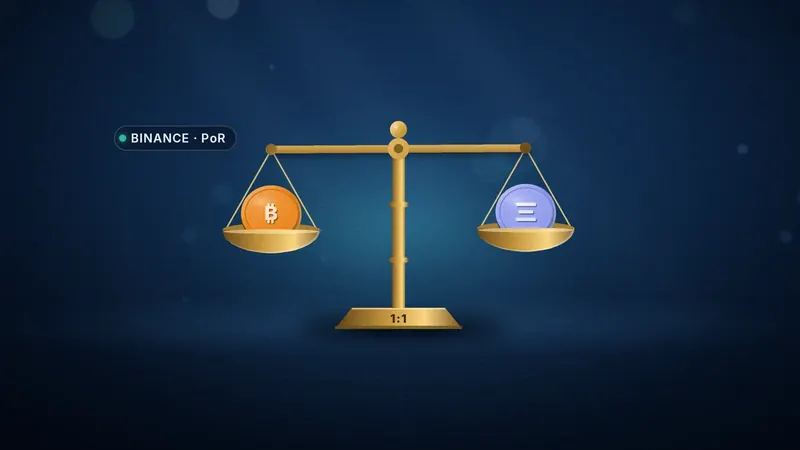
Binance let customers withdraw funds again on 1 November 2026, a few days after the exchange halted all withdrawals following the hack of 29 October. According to Binance itself, around 95% of the stolen amount has now been replenished, and holders of ten coins can check with their own verification that their balance is covered at least 1:1. What that proof does and doesn't tell you, and what to do with it as a European user, is covered below. Everything here comes from Binance's own updates and from press reports; in the sources we opened, no supervisor has commented.
Binance withdrawals after the hack in short
- Withdrawals: phase 1 began on 1 November, phase 2 from 4:00 UTC on 3 November. It is happening step by step, network by network and coin by coin, not all at once.
- Deposits: stayed open throughout, according to Binance.
- Replenished: around 95% of the stolen amount, against 80% on 30 October and 90% on 31 October. The last 5% is made up of less liquid coins that take more time.
- Proof of reserves: a zero-knowledge proof for ten coins, snapshot of 31 October 00:00 UTC. The next proof, covering more coins, is planned for the 4 November snapshot and takes 40 to 50 hours, according to Binance.
- Who pays: Binance says it bears the loss and will not pass it on to users. That is a pledge by the company.
- Culprit: according to Bloomberg, the FBI said on 31 October that the North Korean group TraderTraitor was behind it. A report from Binance itself will only follow after the investigation.
How the resumption went
Between 30 October and 3 November, Binance published a series of updates. The table covers updates #3 to #6:
According to Binance, phase 1 included BTC, ETH, BNB, TRX, SOL, XRP, DOGE and SUI, among others, and on a number of networks also USDT and USDC: Ethereum, BNB Smart Chain, Tron, Solana, TON, Polygon, Avalanche C-Chain, Arbitrum, Base and Optimism. Binance chooses the order based on how many users withdrew the coin the week before, and tests each network before it opens. If a coin or network is not on the list yet, check the withdrawal page in your own account.
On 1 November, Bloomberg wrote, citing DefiLlama, that net outflows that evening were around $3.5bn. Binance said withdrawal volumes stabilised after a peak at the start. The company warns of delays when it is busy: if a withdrawal fails, try again later.
You can read more about the hack itself in our article on the Binance hack.
What proof of reserves proves, and what it doesn't
Proof of reserves is a check you run yourself on your own computer. Binance uses a Merkle tree: it lets you see that your balance was counted in the snapshot. On top of that comes a zk-SNARK, a mathematical proof that at the time of the snapshot the reserves stood at least 1:1 against user balances, without anyone's balance becoming visible. You log in, download the verification tool from the PoR website and run it yourself. According to Binance, the code is open on GitHub and has been audited by an external party.
So it tells you something about what was there, for ten coins, at one moment. That is more than a promise, and it can be checked. It is not a guarantee for the future. Crypto Briefing pointed out that bitcoin's coverage in the first snapshot was 100.04% and BNB's 101.30%: little room to spare. That is in that source, not in Binance's own update.
Worked example: what is that last 5%?
Binance puts the stolen amount at around $6.3bn and says more than $6.34bn has been set aside. A worked example, not a Binance figure:
That is more than $300 million in coins outside the ten large ones. Binance will say exactly how far along it is in a later update.
Where does the money come from?
According to Binance, from three sources: part of the SAFU fund, part of the insurance fund for futures and the company's own operating cash. What was used from the futures fund was, according to Binance, surplus above the required minimum. According to the company, the SAFU fund will be topped up again to around $1bn. SAFU is managed by Nest Clearing and Custody Limited, a recognised clearing house supervised by the financial regulator of the Abu Dhabi Global Market. It is a fund of Binance itself and not a deposit guarantee scheme.
What does this mean for you as a European user?
You still have a balance on Binance. You can withdraw if your coin and network have already had their turn; otherwise you wait for the next phase. Use only the official site or app and type the address in yourself. According to Crypto Briefing, Binance said withdrawals are now made from the new reserve addresses; that changes nothing about the address you send to.
Watch out for scammers. On 2 November, Binance warned of fake websites for the proof of reserves, false links for ‘compensation’ and fake staff asking for money to unlock withdrawals (according to TechBriefly). Binance says it charges no fees to release withdrawals and never asks you to approve a wallet transaction. Open the proof of reserves only via the official Binance site.
Want to stay away. What you are not actively trading belongs on a wallet whose keys you hold. How to choose one is covered in how to choose a crypto wallet and in Hardware wallets in 2026: the complete beginner guide. A hardware wallet for which we have a partner offer: the Blockstream Jade promo code; check the terms on that page.
What about supervision. Whether a platform falls under European supervision is something you check yourself: How to check a MiCA authorisation yourself, and the overview of MiCA authorisations. We previously wrote about Binance and Europe since 1 July: Binance app disappears from Google Play in parts of the EU. Binance's updates say nothing about European customers or supervisors, and the press reports we opened report no reaction from any EU body either.
What is not certain yet
- The final amount. Binance puts it at around $6.3bn; Bloomberg writes ‘over $6 billion’. According to Bloomberg, Binance's ultimate loss is unclear.
- How much of the frozen money comes back. Around $3bn is frozen; frozen is not the same as recovered.
- The cause. Binance mentions a possibly compromised employee laptop and ‘additional points of breach’. A report will follow after the investigation.
- Which coins are still closed. Phase 2 is running in stages; the list in this article is the position as of 3 November.
- The second proof of reserves. It concerns the 4 November snapshot with more coins. Whether that proof holds up will only be known once it is finished.
- European consequences. The sources say nothing about this. If there is news on it, this piece should be the first to be updated.
This article is not investment advice. Crypto can lose a lot of value and you could lose your entire stake.
Frequently asked questions
Can I withdraw from Binance again?
Binance has allowed withdrawals again in phases since 1 November, and for more coins since 3 November. Check your coin and network on the withdrawal page in your account.
What is proof of reserves at Binance?
A check you run yourself: you see that your balance was counted in the snapshot and that the reserves were at least 1:1, without any balances becoming visible. It covers ten coins on 31 October 2026.
Is my money at Binance safe now?
Binance says users will not bear the loss and that the balances of ten coins are covered at least 1:1. The proof is a snapshot, and the pledge comes from the company itself.
What is the SAFU fund?
The Secure Asset Fund for Users is an emergency fund that Binance set up in 2018 and that, according to the company, is going back up to around $1bn. It is not a deposit guarantee scheme.
How do I spot a scam after the hack?
Binance does not ask for money to release withdrawals and never asks you to approve a wallet transaction. Do not trust any link in an email or message promising compensation.
Sources
Read on 4 November 2026.
- Binance: Security Incident, Recovery Update #3 (31 October 2026)
- Binance: Security Incident, Recovery Update #4: Withdrawals Resume in Phases (1 November 2026)
- Binance: Security Incident, Recovery Update #5: PoR Snapshot Now Fully Verifiable (2 November 2026)
- Binance: Security Incident, Recovery Update #6: Withdrawals Reopen for More Assets (3 November 2026)
- Bloomberg via Insurance Journal: Binance Restarts Withdrawals as Questions Linger on Record Hack (1 November 2026)
- crypto.news: Binance completes reserve proof for 10 tokens after $6.3B hack (2 November 2026)
- TechBriefly: Binance warns of scams as withdrawals resume (3 November 2026)
- Crypto Briefing: Binance updates Proof of Reserves addresses (around 31 October 2026)