EURCV on Kraken: Société Générale's euro stablecoin
Kraken has listed EURCV, a Société Générale-FORGE euro stablecoin, since 3 November. What the white paper says on backing, redemption and risk.
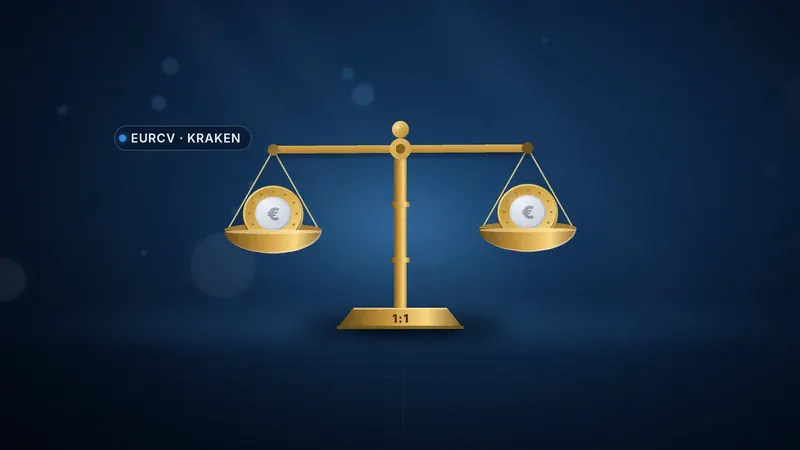
On 3 November 2026, Kraken opened trading in EUR CoinVertible (EURCV). It is a euro stablecoin from Société Générale-FORGE (SG-FORGE), the digital-assets subsidiary of the French bank Société Générale. Kraken calls the token MiCA-compliant and ‘bank-issued’. This article sets side by side what Kraken writes, what SG-FORGE itself says in the white paper and on its website, and where those texts differ.
A stablecoin issued by a bank is not the same as a stablecoin from a crypto company. You hold a claim on a single issuer, which in turn is tied to the same bank that holds the reserve. What that means is explained below.
EURCV on Kraken in short
- What: a euro stablecoin, issued as an e-money token under MiCA by SG-FORGE. Each token has a nominal value of one euro.
- On Kraken: trading has been live since 3 November 2026, according to Kraken's blog. Trading through the Kraken app and Instant Buy will only follow ‘once liquidity conditions are met’, Kraken writes.
- Issuer: Société Générale-FORGE, which according to the white paper has been authorised by the French supervisor ACPR as an electronic money institution since 1 July 2024.
- Backing: according to the white paper, at least one euro of reserve per token, held in segregated accounts. According to SG-FORGE's website, the reserve is held entirely in cash; the white paper also allows liquid securities (see the table).
- Redemption: at nominal value in euros, from the issuer or a partner. A verification check (KYC) and a payment period apply.
- Downside: you take credit risk on the issuer and the parent bank, and the issuer can freeze tokens.
What Kraken says itself
Kraken calls EURCV a ‘MiCA-compliant stablecoin pegged to the euro’, issued by SG-FORGE. The blog makes four points: the issuer is a bank subsidiary, the token is issued as an e-money token under MiCA, according to SG-FORGE the token is backed one-to-one by reserves in segregated accounts at Société Générale, and SG-FORGE publishes daily reports on that reserve. Note the words ‘according to’: the backing is a statement by the issuer, not something Kraken checks itself.
Kraken also points to two limitations. Only deposit tokens through networks that Kraken supports, because deposits through other networks are lost. And geographic restrictions may apply. The blog does not say which; check in your account whether EURCV is available in your country. If you do not have an account yet, Cryptocode has a Kraken review with fees and terms.
What SG-FORGE writes in the white paper
The white paper we read is the version published on 14 October 2025 (the first notification dates from 30 May 2024). The main points:
A worked example of the rule. If 1,000,000 EURCV are in circulation, the reserve must, according to the white paper, be worth at least 1,000,000 euros, of which at least 300,000 euros in cash. This is an illustration of the rule, not a statement of the current position. SG-FORGE's website also quotes a figure for EURCV in circulation; we do not repeat that number, because the date attached to it is not clear.
Where the sources differ
SG-FORGE's website calls EURCV ‘100% backed by cash’ and says the reserve is fully segregated. The white paper requires at least 30% in cash and allows the rest in liquid securities. That need not be a contradiction, because the actual composition may hold more cash than the minimum. But they are different promises: the website describes the current position, the white paper the rules. SG-FORGE says it publishes the composition daily; check it yourself if it matters to you.
A second difference: Stellar is listed as a network in the white paper, while SG-FORGE's homepage, as we read it, still says ‘coming soon’. The network you use determines where you can send EURCV. On Kraken, you must use the network that Kraken itself offers.
How does it differ from other euro stablecoins?
On Cryptocode you can read earlier pieces on the growth of euro stablecoins and the role of EURC and on Qivalis, the euro stablecoin plan backed by 37 banks. EURCV is part of the same movement: banks issuing euro tokens themselves. The difference from a token issued by a crypto company lies in who holds the reserve. With EURCV, that is the bank that is also the issuer's parent. The white paper says so itself: you take on the credit risk of Société Générale, because it is both the parent company and the first custodian.
Another point is who may hold the token. According to the white paper, only ‘Permitted Transferees’ may hold EURCV, which excludes US persons. For a European reader this usually does not matter, but it is in the terms.
What does this mean for you as a European investor?
You want to park euros without exchange-rate risk. EURCV is meant as a digital euro on public blockchains. Its value is tied to one euro, but a stablecoin is not a bank account: the sources we opened mention no deposit guarantee, and the white paper warns that if the issuer fails you could lose part or all of your money.
You trade on Kraken. First check whether EURCV is available in your country, and whether you can trade via the app, Instant Buy or only via Kraken Pro. The blog says the app and Instant Buy will come later.
You want to get back to euros. Redeeming with the issuer is possible, but it goes through an application with checks and a payment period. Selling on an exchange is usually faster, but then the price depends on the market. The white paper itself says you may sometimes be unable to sell at nominal value.
Tax. How a stablecoin is taxed differs by country and is not covered in these sources. See crypto tax in Europe.
More on stablecoins. What are stablecoins covers the background, and in the MiCA register on Cryptocode you can see which providers hold an authorisation.
What is not certain yet
- The actual composition of the reserve. The website (100% cash) and the white paper (at least 30% cash) say different things; we have not opened SG-FORGE's daily reports.
- The register. We did not open the ACPR register or the ESMA register for e-money tokens; the authorisation comes from the white paper and SG-FORGE's own website.
- The redemption terms. The summary we read mentions a confirmation within five business days and payment no later than the last business day of a month. Read the exact text in the white paper before you redeem.
- Availability by country on Kraken. The blog mentions geographic restrictions without a list.
- Significant or not. The white paper is dated 14 October 2025. We have not checked whether the status has changed since.
This article is not investment advice. Crypto can lose value sharply and you could lose your entire stake.
Frequently asked questions
What is EURCV?
EUR CoinVertible (EURCV) is a euro stablecoin from Société Générale-FORGE. It is issued as an e-money token under MiCA, and each token has a nominal value of one euro.
Can you buy EURCV on Kraken?
According to Kraken, trading has been live since 3 November 2026. Trading through the Kraken app and Instant Buy will follow, according to Kraken, only once there is enough liquidity, and geographic restrictions may apply.
Is EURCV safe?
No source can give you certainty. The reserve is held in segregated accounts, but the white paper warns of credit risk on the issuer and Société Générale, and of tokens being frozen.
Can you exchange EURCV for euros?
Yes, redemption at nominal value is possible with the issuer or a partner, after your details have been checked. You can also sell on an exchange, but then the market sets the price.
Which blockchains does EURCV work on?
The white paper lists Ethereum, Solana, XRP Ledger and Stellar. On Kraken, you must use the network that Kraken itself shows.
Sources
Read on 20 November 2026.
Prices right now


Mid-market price from CoinGecko in euros, updated at 23:00 UTC.All 20 prices